Real-Time Task Reservations and Scheduling in Linux
Baby's first steps into kernel development
Cameron Lee, 12/21/2025 - 11:18pm
Preface
One of the most challenging and interesting classes I've taken at SDSU
is
Dr. Hyunjong Choi's Theory
Of Real-Time Systems course. As part of this class, I modified the
Linux kernel to support explicit real-time task reservations, periodic
execution, and end-to-end latency monitoring. While Linux supports
several real-time scheduling mechanisms, implementing textbook
real-time scheduling models required working directly with core kernel
structures like the
task_struct,
scheduler, and kernel timers. Using custom kernel system calls, I
implemented Rate Monotonic scheduling and partitioned Earliest
Deadline First scheduling across multiple CPU cores. This post focuses
less on scheduling theory and more on what building these features
revealed about how the Linux kernel represents tasks and enforces
behavior across context switches.
Background
This project uses classic real-time models, with tasks that are
periodic and declare a computation budget
C
and a period
T
. Schedulability depends on whether the kernel can allocate CPU time
to all tasks without violating these constraints.
Enforcing this model in Linux required more than just choosing a
scheduling policy. It required tracking execution time across context
switches, associating timing state with each task, and integrating
kernel timers into the task lifecycle. These requirements pushed the
project into core kernel structures and scheduler hot paths, which
became the primary learning focus for me.
For development of this project I modified and compiled the Raspberry
Pi Kernel-4.9.80
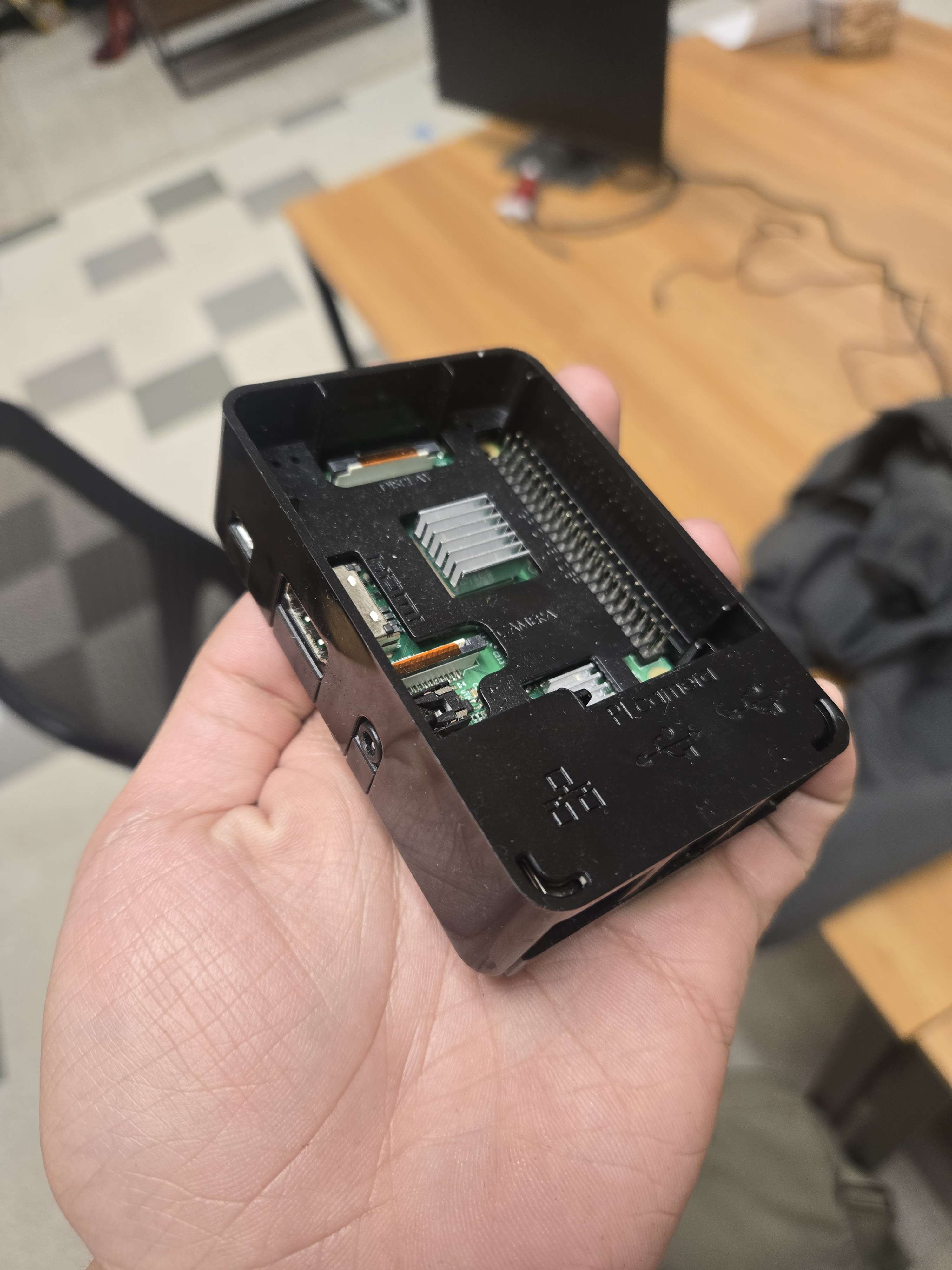
CanaKit Raspberry Pi 3
The first thing I had to figure out was how to track all my new
information, like the budget and period. It needed to be something
that was intrinsically tied with the tasks themselves and would
persist between different states and changes. This eventually led me
to the monster that is the
task_struct. When I got to this point of
researching how this was put together I was WOW'd by how massive the
file was, I didn't even know structs could be that big. If you've ever
worked with anything relating to threads/processes in the Linux kernel
you know exactly what I'm talking about, it's basically unavoidable.
For those who don't know, a quick tl;dr: the
task_struct is a gigantic struct with 300+
different fields (depending on the kernel version), with many of those
being other structs with more fields! The
task_struct is the DNA of every process in
Linux and has every single piece of information you'd want to know
about said process. There's a few different ways to access this
magical structure, for this project I used
find_task_by_pid_ns()
and
task_active_pid_ns()
in order to get the struct using the task's pid and namespace.
Crossing The Boundary Between User and Kernel
One of the coolest parts of the project was adding custom system calls
and realizing how different kernel code feels. At first I thought that
making system calls would be like making a normal function, but in
practice you have to be programming with extreme caution every step of
the way. The kernel has to treat everything with suspicion, arguments
from the userspace can't be trusted and there are no error cases that
can be ignored because continuing with a partially validated state
risks corrupting global kernel data.
Even the mechanics of adding the system call was a headache. In order
to add new system calls, you have to specify in
unistd.h
how many entries you need to have in your system call table. I lost
more time than I'd like to admit toiling over this one line:
#define __NR_syscalls (401) not realizing
that the table had to be aligned in increments of four...
Defining the system call itself was also very different, you have to
use the
SYSCALL_DEFINE*
macro, with the asterisk replaced with however many parameters you
need. At one point, I needed to pass seven parameters in order to
support chain metadata, only to discover that
SYSCALL_DEFINE6 was the hard limit. The
solution was to pack all the information as my own
chain_struct and pass it as a
void *. In the user space things like this
would proabably just feel like an inconvenience, but in the kernel, it
felt purposeful and made me design with more intention and with
efficiency in mind.
During development, I leaned on kernel modules to make testing a
little easier. I created the system calls with hooks that could be
modified with loadable modules. Being able to test functionality
without needing to rebuild the entire kernel saved me time and some
sanity, but the process was still slow compared to user-space work. I
really got a feel for how expensive minor mistakes become at this
level.
Context Switches and Time Accounting
Most of the work for this part of the project resides in
kernel/sched/core.c
yet another intimidating file, this is where the Linux scheduler's
core logic is written. This file decides when a task stops running,
when another one begins, and everything in between.
At the center of this, is the
__schedule(). This function is evoked
every time we need a context switch, whether it was because the
current task was preempted, blocked, or voluntarily gave up execution.
Inside
__schedule(), the scheduler picks
the next task to run, does some bookkeeping, and triggers the context
switch.
This made for the ideal place for time tracking. When a
new task is scheduled in, the kernel has a precise moment where CPU
ownership changes. By recording timestamps at the point when a new
task is scheduled and when said task completes, execution time can be
found as the difference between these two events.
One minor detail made this a little more complicated than it seems: a
task doesn't necessarily run in one continuous stretch. A task could
be preempted, rescheduled, blocked by I/O, etc. Each of these events
gives a separate "slice" of the execution time. Because of this,
execution time can't be measured with one start and end timestamp.
Instead, we have to make use of a per-task time accumulator, where
every time a task is scheduled out, the elapsed time since it was last
scheduled in is added. The accumulator is then reset at the beginning
of the next period.
Implementing the accumulator forced me to be precise about
where each piece of information lived and when it was updated. This
was one of the kernel's hottest paths, and as such the tiniest changes
could propogate through the entire system.

Subtle foreshadowing
The Bug That Bricked My Raspberry Pi
This leads me to the last night that I had to finish the project.
Right when I started to think I had a grasp on this whole kernel
development business. I was implementing the logic for measuring
end-to-end latency for chained tasks and it was finally time to test
my code. I ran the cross compiler, had to go back to fix some minor
mistakes, and booted up the Pi.
Although this time, I wasn't getting any response from my serial
connection. I thought maybe the kernel got corrupted, so I clean built
it again but got the same result. I was beginning to panic. This had
never happened before. I had compiled this kernel hundreds of times at
this point and I had never seen this before. Usually if I have some
kind of error in my code the compiler would break and I could go back
to fix it, but this time I wasn't getting any errors or warnings.
My next thought was that maybe the hardware had given up on me. I
tried multiple different ports and cables, I even borrowed another
group's RPI kit and tried to run my kernel on all of their hardware
and nothing changed. Maybe the problem was somehow with the serial
connection to my laptop? I tore the lab apart trying to find an hdmi
cable, keyboard, and mouse so I could run the Pi independently and
when I booted up, I was greeted with this wonderful screen:

I would later learn this is the splash screen from the GPU when the
kernel can't boot.
what.
After hours of debugging, reflashing, and second-guessing the
hardware, the process started feeling less like engineering and more
like faith. Recompile. Reboot. Wait. Stare. Hope. Emotionally, the
night felt like I was in Las Vegas hoping that one more pull of the
slot machine would finally pay out. Same ritual, different casino.
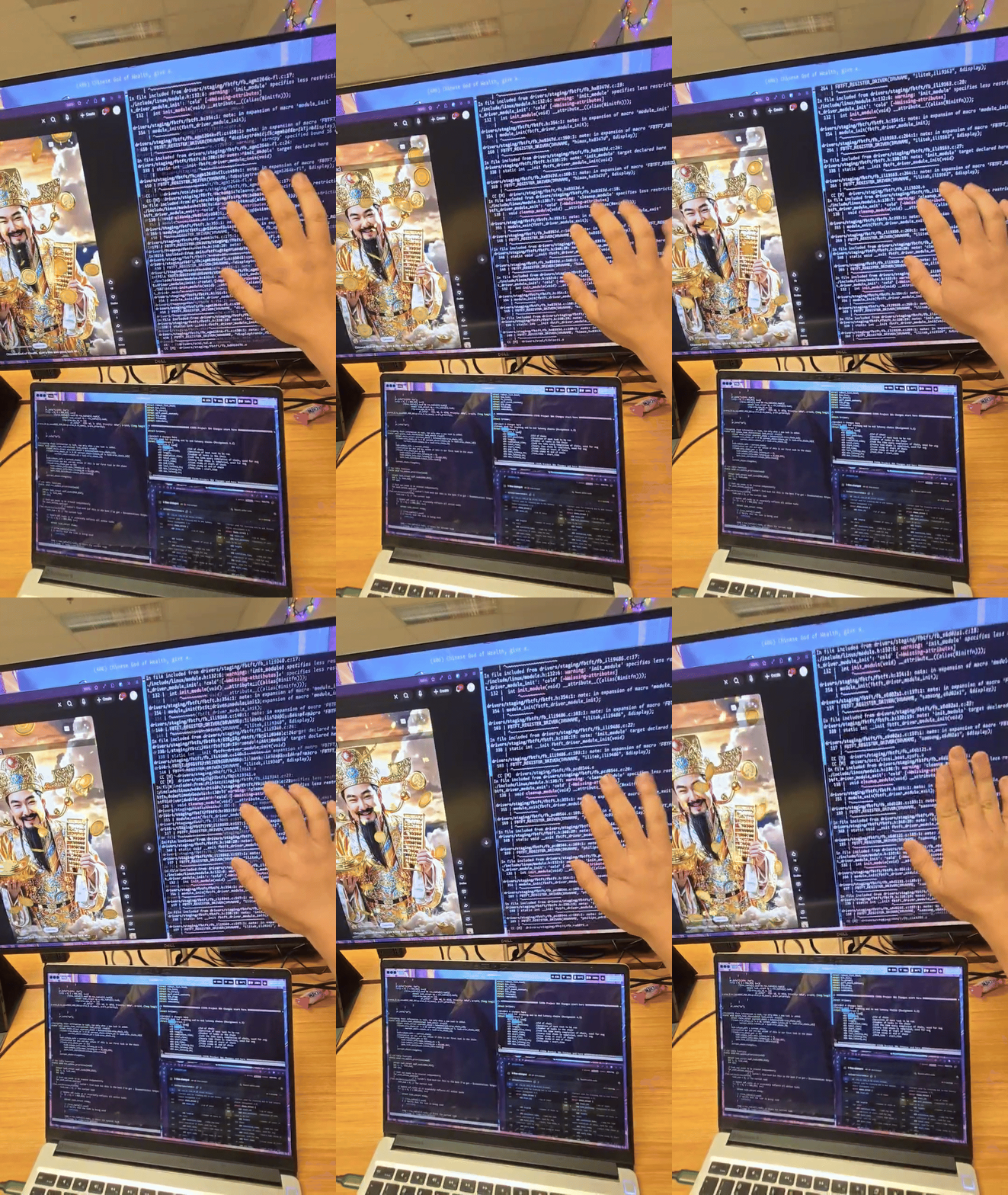
Recompiling the kernel at 4am feels statistically indistinguishable
from gambling
Eventually, I found my error and I felt like the biggest idiot in the
world. See, in my
__schedule() (what'd I
call it? One of the hottest paths in the linux kernel?), I had
implemented logic for tracking chain information in a shared
chain_struct that I added a pointer for in
the
task_struct. But somehow, I failed to
think about the fact that this code was running for
every
instance of
every
process
EVERY
time it ran, and I was
NOT
implementing chain information for every process on the machine.
Without checking for the
chain_struct first, I was dereferencing a
null pointer like a bajillion times a second. So bad was this mistake
that the kernel couldn't even boot to a point where I could see any
errors. *sigh* You live and you learn.
Debugging in the Kernel Is a Different Beast
And that is no exaggeration. Slow compile times, long reboot cycles,
limited feedback; so many factors play into needing to get things
right the first time. There is no carelessness that will go unpunished
in the kernel, and the benefit of understanding the system and
planning ahead is priceless. A whole host of unique challenges are
introduced as well.
Early on, every kernel change meant manually copying the
configuration, mounting the target filesystem, backing up the kernel
image, cross-compiling, loading modules, and unmounting everything
again. It worked, but each iteration added friction, and debugging
became as much about patience as correctness.
Eventually, I realized the real problem wasn't in the kernel code
itself, but the minor inefficiencies at every turn. I scripted the
entire process into a single command, turning minutes of repetitive
monotony into one line. That small change dramatically reduced the
overhead of each iteration and made it easier to focus more on writing
the code and less on running the code.
How This Changed My Work
I learned a (pardon my french) sh*t ton in this project, I would say
this project is at least top 3 impact to my development as a
programmer. I had to learn how to be more deliberate with my
structure; Think about cleanup paths early, asking questions like "if
this fails halfway what state am I leaving behind?"; Make sure I'm
maintaining everything properly: canceling timers, freeing memory,
resetting fields, etc; Writing code that future me will be able to
debug, like making sure to include verbose and detailed printouts as I
go, rather than going back and adding print statements everywhere
after it breaks (I found myself recompiling the kernel multiple times
just because I needed to make my printouts more readable for myself).
The kernel has no safety net, and learning to work without one
reshaped how I write code everywhere else. I'm much more deliberate,
cautious, and better at breaking down large complex problems. These
habits spread across all domains, and they're something I'll carry
forward for the rest of my career.
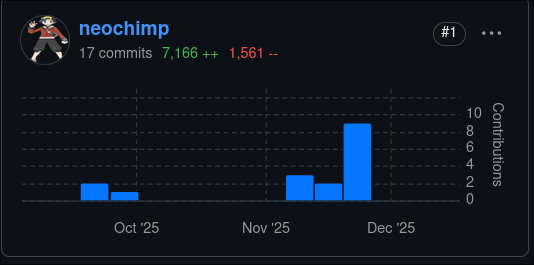
7,166 lines of code later...
--
Until next time, cheers~